
Influencers in Detroit
To hire Detroit influencers, define whether your campaign needs city attendance, three-county coverage, ecommerce conversions, or destination storytelling. Review CreatorFanBase stored-city matches first, then evaluate US candidates against the same brief. Confirm audience fit, production feasibility, deliverables, and rights before choosing self-directed discovery or separately quoted agency support.
Campaign niches in Detroit
1. Draw the Detroit service boundary before choosing a creator
A useful Detroit influencer brief starts with a boundary, not a follower threshold. Are you asking someone to attend a venue within the city, support a service covering a wider area, sell a product online, or make destination content? Those assignments can share a creative theme while requiring very different evidence from a creator. Treating them as interchangeable produces shortlists that look locally relevant but cannot reliably serve the business objective.
Visit Detroit describes its role as “your official concierge to the Detroit region, spanning Wayne, Oakland, and Macomb counties.” That tourism description supports a three-county regional planning lens. It does not mean that a city-specific business serves that entire area, or that a creator associated with Detroit can attend anywhere within it. Your actual service boundary must come from the business brief.
| Buyer boundary | What belongs in the brief | Evidence needed before selection |
|---|---|---|
| City-specific venue | Exact address, attendance requirement, customer action | Creator travel confirmation and relevant audience evidence |
| Three-county service area | Whether Wayne, Oakland, and Macomb counties are all included | Coverage fit, audience relevance, and service eligibility |
| Ecommerce campaign | Shipping eligibility, product fit, conversion objective | Audience intent, content quality, and measurement access |
| Destination content | Intended traveler, story purpose, distribution destination | Production plan, content suitability, and location permissions |
The practical distinction is between where the business operates, where production happens, and where the intended viewer lives. These may be three different places. An ecommerce seller might need Detroit-related storytelling without requiring local production. A venue campaign might require attendance but only a narrowly defined audience. A destination brief might target prospective visitors rather than people already nearby.
Record those dimensions separately in the campaign intake. A single field labeled “Detroit” is too ambiguous to carry all three meanings. Ask the decision-maker to approve the service area, production requirement, and audience requirement independently before discovery begins. That prevents later disagreements about why a visually appealing candidate was rejected.
It also makes expansion more deliberate. If the initial shortlist is unsuitable, decide which constraint can change: production location, audience breadth, creative format, or scheduling. Do not quietly change a city-attendance campaign into a national awareness campaign because additional profiles are easier to find. The wider search should answer the original objective or follow an explicitly revised brief.
This boundary-first approach is the organizing principle for the rest of this buyer hub. It keeps local relevance meaningful without assuming that every Detroit-related campaign requires the same type of creator.
2. Follow an objective-to-shortlist decision tree
The fastest route to a useful shortlist is to separate venue footfall, ecommerce sales, and destination content before comparing personalities or aesthetics. These objectives require different conversion events and different reasons for choosing a creator. A candidate can be excellent for one branch and unsuitable for another without either judgment being contradictory.
Start with the customer action
Ask what a viewer should do after seeing the content. “Become aware of us” is not specific enough when the campaign also depends on attendance, purchases, or reusable destination assets. Define the primary action and make secondary benefits subordinate to it.
Branch by the constraint that cannot move
For a venue, the fixed constraint is often the physical visit. For ecommerce, it may be product eligibility and purchase intent. For destination content, it may be the editorial story and the ability to produce usable footage. This constraint determines which evidence deserves the most weight.
Turn the branch into a shortlist rule
A shortlist rule should be testable. “Feels Detroit” is subjective; “can attend the specified venue, has suitable audience evidence, and can deliver the agreed format” gives the buyer a defensible basis for selection.
- If the objective is venue footfall: confirm the venue boundary and desired visit action. Review stored-city matches first, then require attendance feasibility and audience relevance. Consider broader US candidates only when their travel and audience proposition genuinely fit.
- If the objective is ecommerce sales: define the product, eligible customers, purchase journey, and tracking approach. Prioritize category credibility and conversion-oriented content. Retain Detroit relevance only where it contributes to the campaign rather than treating a city label as a sales signal.
- If the objective is destination content: specify the traveler question, story angle, production scope, and intended distribution. Evaluate both published storytelling and the practical ability to create assets at approved locations.
After choosing a branch, create exclusion rules before ranking candidates. These rules should concern material requirements, not arbitrary preferences that eliminate otherwise suitable creators.
- Exclude candidates who cannot meet a mandatory attendance or production condition.
- Exclude candidates whose content conflicts with the brand’s substantiated message.
- Exclude proposals that omit essential deliverables or required usage rights.
- Hold candidates with incomplete evidence for clarification rather than presenting assumptions as facts.
If a campaign genuinely serves more than one objective, separate the assignments within the brief. A creator might publish a purchase-focused video and also supply destination footage, but those outputs need different acceptance criteria. Combining them into a vague “local campaign” makes both evaluation and reporting weaker.
The result should be a small, explainable set of candidates, each associated with a defined job. That is more useful than a broad collection of profiles selected because they share a geographic label.
3. Read stored-city matches and US candidates as different evidence
CreatorFanBase listing scope should be read in sequence: stored-city matches first, followed by US candidates. The first group offers a city-associated starting point. The second expands discovery beyond that stored-city association. Keeping those groups visibly distinct helps buyers understand what was found and what still needs verification.
A stored city may reflect historical origin or past residence. It does not establish current residence, current production location, or the feasibility of attending a particular booking. Likewise, a US candidate is not necessarily Detroit-based. These distinctions matter most when a campaign requires physical presence, but they also affect the credibility of place-led storytelling.
| Candidate information | What it can contribute | What it does not establish |
|---|---|---|
| Stored Detroit city match | A relevant starting point for review | Current residence or guaranteed attendance |
| US country match | A broader candidate pool for consideration | Detroit location or local audience concentration |
| Public content portfolio | Examples of style, topics, and execution | Current availability or rights to reuse past work |
| Creator-provided audience data | Evidence to assess against the target market | Future campaign performance |
| Direct production confirmation | Feasibility for the proposed assignment | Venue permission or every other campaign approval |
Maintain that provenance in your internal shortlist. A simple note stating “stored-city match” or “US candidate” is more informative than merging everyone under a heading that implies verified local residence. Add separate fields for audience evidence, attendance confirmation, production needs, and outstanding questions. These can be buyer-maintained notes rather than assumed platform features.
Geographic relevance should then be judged according to the objective tree. For venue footfall, ask whether the available audience evidence is sufficiently specific to support the attendance goal. If it is too broad, record that limitation. For ecommerce, a geographically dispersed audience may be entirely appropriate if product fit and purchasing eligibility are strong. For destination content, the creator’s ability to explain a trip or experience may matter more than residential status.
Avoid using comment anecdotes as a substitute for audience analysis. A few locally themed comments can suggest questions to investigate, but they do not establish the overall distribution of viewers. Similarly, a previous Detroit-related post shows that content was made or discussed; it does not independently confirm current access or a continuing local presence.
Expansion to US candidates should be a conscious sourcing decision. Explain what the broader candidate contributes: stronger category alignment, a suitable format, a relevant audience, or a workable production plan. A country-wide fallback becomes useful when its fit is explicit, not when its geographic difference is hidden.
4. Match category credibility and micro creators to the assignment
A cross-category Detroit influencers hub should help buyers choose the right kind of partner without pretending that every category uses the same creative brief. Product demonstrations, personal recommendations, service explanations, and destination narratives place different demands on a creator. Start with the audience problem your offer solves, then examine whether the creator can discuss that problem convincingly and accurately.
Micro creator selection is particularly vulnerable to shortcuts. A smaller following is not proof of a concentrated local audience, stronger trust, lower cost, or easier scheduling. Use follower scale as one descriptive attribute. The actual decision should combine content relevance, audience evidence, production quality, communication, and the suitability of the commercial proposal.
Review several relevant pieces of work rather than relying on a single standout post. Look for whether the creator explains unfamiliar subjects clearly, integrates a call to action naturally, and preserves a recognizable voice when discussing a brand. The strongest fit is not necessarily the most polished production; it is the execution that serves the intended customer journey.
- Category credibility: Does the creator regularly address the needs or interests connected to the offer?
- Message discipline: Can the proposed concept stay within claims the brand can substantiate?
- Audience interaction: Do relevant questions and responses reveal an ability to explain, not merely attract reactions?
- Commercial execution: Are sponsorship messages understandable without overwhelming the creator’s usual style?
- Production suitability: Can the creator deliver the framing, sound, demonstrations, and supporting assets the assignment requires?
These checks work across categories while leaving specialist work where it belongs. A detailed product-testing protocol, a technical claims review, or a category-specific demonstration script should sit in a separate specialist brief. This hub establishes the hiring decision, not a replacement for those deeper tools. When the next question is which sourcing option fits your workflow, use the comparison overview rather than stretching a city guide into a specialist operating manual.
For micro creators, also consider whether the proposed workload is proportionate to the assignment. Multiple edits, alternate hooks, raw footage, and extended usage can turn an apparently simple collaboration into a substantial production job. Evaluate the whole scope instead of assuming that follower size predicts effort.
Finally, distinguish personal preference from commercial fit. A buyer may enjoy a creator’s humor or visual style but still need evidence that the offer can be explained responsibly. Conversely, a less familiar style may deserve consideration if it reaches the intended audience and supports the required action. Write down the reason for each recommendation so that aesthetic enthusiasm does not silently replace the brief.
5. Design the Detroit assignment before choosing its publishing surface
Platform choice should follow the job, not lead it. Instagram, TikTok, and YouTube can each support different forms of storytelling, but a platform label alone does not tell you whether a proposed execution will drive visits, explain a product, or create useful destination assets. Ask what the viewer needs to see, understand, and do, then choose a format the creator can execute well.
For Instagram, evaluate the specific placement proposed rather than treating every output as equivalent. A short video, a sequence of updates, and an image-led explanation create different viewing experiences and require different assets. Clarify the placement, caption responsibilities, call to action, and any supporting material in the scope.
For TikTok, examine how the creator introduces the problem or experience, establishes context, and carries attention through the message. A concise format still needs accurate claims and a realistic next step. Do not equate a familiar editing style with evidence that the creator can communicate your offer effectively.
For YouTube, decide whether the assignment needs a dedicated treatment, an integrated segment, or a shorter output. A more detailed explanation can accommodate context that would overwhelm a brief clip, but that additional depth must be justified by the buyer’s objective. Review relevant examples of pacing and audience response.
- Choose the viewing task: Is the audience being invited to visit, compare, purchase, or plan?
- Choose the minimum useful explanation: Identify what cannot be omitted without confusing the viewer.
- Choose the publishing format: Match the explanation to the creator’s demonstrated strengths.
- Choose the conversion route: Specify the destination and how the viewer will recognize the next step.
- Choose the reporting evidence: Agree what can be supplied for that placement and when it will be reviewed.
Editorial campaign concepts can help make these choices tangible. A venue campaign could use a clear “what to expect before visiting” narrative. An ecommerce campaign could address a product-selection question. A destination campaign could organize content around a traveler’s planning decision. These are recommendations for campaign design, not observations about established Detroit creator activity or local market performance.
Avoid requesting identical content across all three platforms by default. A shared idea may need different openings, pacing, framing, and supporting copy. If adaptation is important, define it as work and include it in the proposal. If only one distribution channel is necessary, concentrated execution may be more useful than a broad package with weak purpose.
The objective is not maximum platform coverage. It is a coherent path from creator credibility to viewer understanding to the action the business can actually support.
More the US creators for Detroit campaigns

Alan Chikin Chow
Comedy creator

A4
Comedy creator

Addison Rae Easterling
A social media personality and actress who gained fame on TikTok, known for her dance videos and vibrant online presence.

5-Minute Crafts
Gaming brand account from USA

albert_cancook
Food and cooking creator in the US

Alicia Keys
American singer, songwriter and pianist known for Fallin' and No One.

ABC News
Education brand account from USA

Agnez Mo
Indonesian-American singer, songwriter, actress, and dancer based in Los Angeles.

Adri Latina
Latina creator sharing her testimony and entertaining content online.

21 Savage
Grammy Award-winning rapper known for his distinct flow and impactful lyrics.

Adam Sandler
American actor, comedian and producer known for Happy Gilmore and Uncut Gems.

alexandra daddario
American actress known for her roles in films and TV series.

Airrack
Stunt and challenge creator

A$AP ROCKY
American rapper, singer, songwriter, record producer, and model.

A S H L E Y G R A H A M
American supermodel, body activist, and entrepreneur.

Ali “SypherPK” Hassan
A prominent Fortnite streamer and content creator known for his engaging gameplay and educational commentary.

Ahmad Alzahabi
Ahmad Alzahabi shares delicious halal recipes and cooking tutorials with a focus on Middle Eastern and international cuisine.

Adin Ross
American streamer and content creator known for his live streams and collaborations.
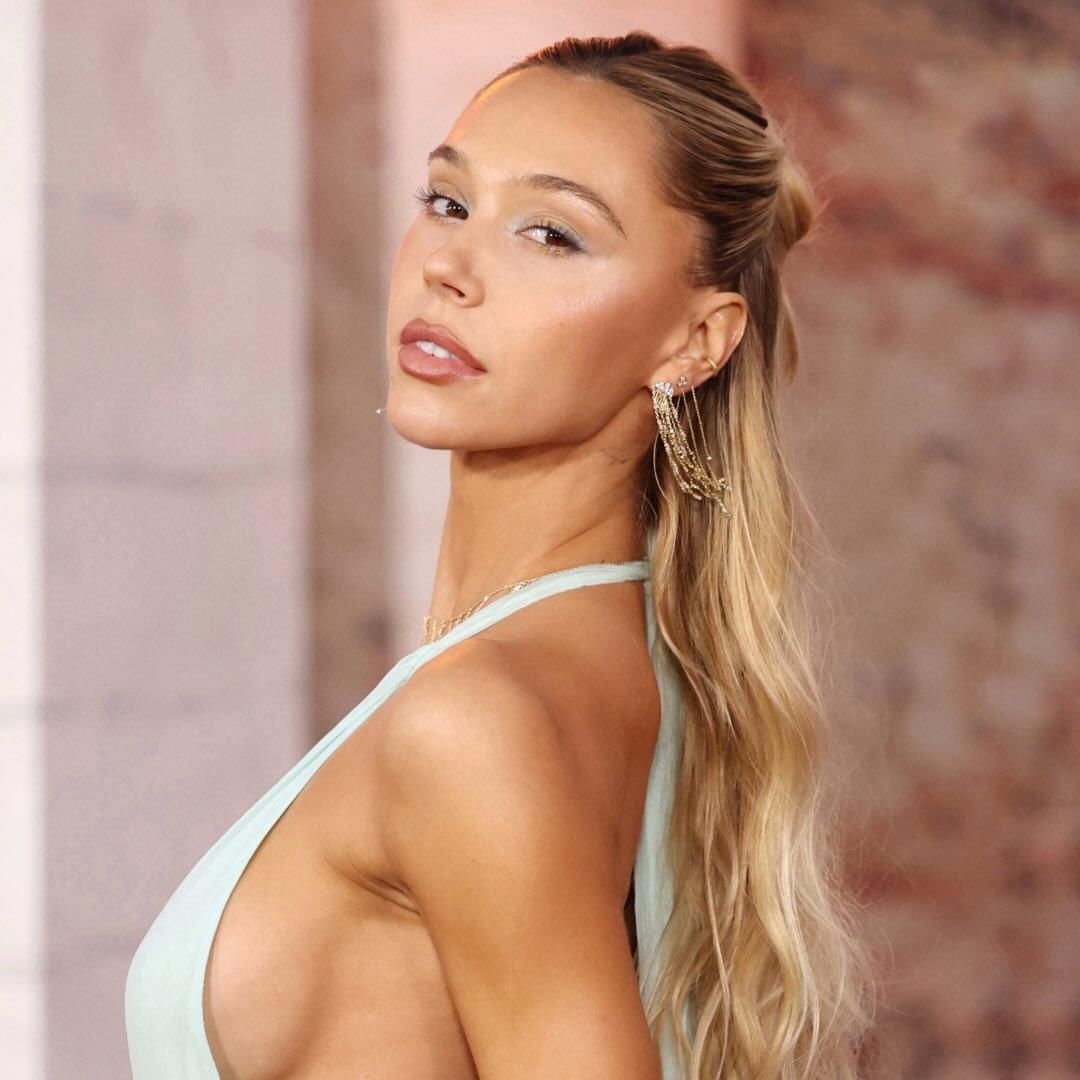
Alexis Ren
An American model, influencer, and entrepreneur known for her digital presence and health advocacy.

Abby Roberts
This makeup artist and digital creator is known for her transformative and artistic looks.

Alexa Demie
American actress known for playing Maddy Perez in Euphoria.

Alissa Violet
Alissa Violet is an American model, actress, and social media personality known for her engaging online presence.

Alex Cooper
Call Her Daddy host and founder of the Unwell network

Adamari Lopez
Puerto Rican TV Host, Actress, and Author, known for her roles in telenovelas.

Alex Morgan
Two-time World Cup Champion and Olympic Gold Medalist in soccer.

Alessia Cara
Grammy-winning Canadian singer and songwriter known for hits like 'Here' and 'Scars to Your Beautiful.'

Alix Earle
A social media personality known for sharing her daily life, beauty routines, and honest advice.

3Blue1Brown
Making complex math and science concepts understandable through elegant visualizations.

AlishaMarie
Alisha Marie creates relatable and comedic content, often focusing on lifestyle, fashion, and humorous skits.

Aleska Genesis
Venezuelan model, TV host, and entrepreneur.

Aimee Song
Korean-American fashion and interior designer, influencer, and New York Times bestselling author.

ALEXANDRA MVP
Entrepreneur and CEO of @onpointgirlsrd and @charlottespatisserierd.

Alexander Volkanovski
UFC Featherweight Champion and entrepreneur from Australia.

Adrienne Eliza Bailon-Houghton
Emmy-winning TV host, singer, and actress known for 'The Real' and 3LW.

ACOOKNAMEDMATT
A Seattle-based chef acclaimed for his fun cooking content on TikTok and his new cookbook.

Alex Hormozi
Alex Hormozi teaches entrepreneurs how to acquire customers and scale businesses to millions.

ALEJANDRA JARAMILLO
TV host, actress, and content creator based in the USA.

Alejandra Espinoza
Television host, model, and actress known for winning Nuestra Belleza Latina.

ALEXANDER
American social media personality and content creator known for his comedic skits.

Alex Costa
Alex Costa helps men maximize their looks and reach their full potential through fashion, grooming, and lifestyle advice.
6. Make physical production a separate go-or-no-go decision
For a city-attendance campaign, production feasibility deserves its own approval gate. A promising audience and an attractive concept do not resolve access, scheduling, or the practical conditions of filming. Treat those as operational questions with named owners. For a three-county service campaign, confirm which locations actually need representation rather than implying that one shoot establishes coverage across the region.
Begin with the exact production requirement. Does the creator need to attend personally, film a demonstration, speak with a representative, or deliver footage captured under a separate arrangement? Each option changes the work and the permissions needed. If physical attendance is optional, say so; otherwise, a buyer may unnecessarily exclude suitable candidates or accept an impractical proposal.
Current venue rights must be verified separately with the appropriate venue representative. Tourism context is not permission to film commercially, and a creator’s previous content is not proof of permission for your booking. Confirm the actual activities proposed, the spaces involved, any people who may appear, and any conditions the venue places on production. Do not assume one approval covers every intended use.
- Before outreach: identify the proposed venue, production purpose, required outputs, and non-negotiable access needs.
- Before booking: confirm attendance feasibility, the permission owner, scheduling dependencies, and any unresolved production conditions.
- Before filming: circulate the approved plan, contact details, permitted scope, and a process for handling changes.
- Before publication: check that the final assets match the agreed permissions, approved message, and contractual scope.
The buyer also needs a fallback that protects the objective. If an attendance-dependent assignment cannot proceed, rescheduling may be more appropriate than substituting unrelated footage. If the goal is ecommerce explanation, remote production may remain viable. If the goal is destination storytelling, a revised concept must still answer the intended traveler question and use appropriately authorized material.
Agree how operational changes affect the commercial arrangement. Additional travel, a revised shoot, new products, extra participants, or a changed location can alter effort and timing. A clear change process is more useful than assuming the creator will absorb every adjustment within the original scope.
This production gate should happen before extensive creative development. It prevents a team from investing in a detailed storyboard for a location or attendance plan that has not been confirmed. It also protects the shortlist from false precision: a candidate can remain creatively suitable while being marked operationally unresolved until the necessary confirmations are obtained.
7. Ask cost questions that separate sponsorship from content rights
The useful answer to “What do Detroit influencers cost?” is a scoped proposal, not an unsupported local rate estimate. Creator pricing can reflect the work, distribution commitment, production requirements, usage, and commercial restrictions being requested. Without those details, two quotes may appear comparable while purchasing materially different things.
Separate the fee for creating content from the value of publishing it and the rights to use it elsewhere. A sponsored post does not automatically include raw footage, alternate edits, paid advertising use, or indefinite reuse. A production-only assignment may provide useful assets without any promise of publication to the creator’s audience. Establish which arrangement you need before asking for a final quote.
| Commercial component | Buyer question | Why it changes the comparison |
|---|---|---|
| Deliverables | What exact assets and placements are included? | Different outputs require different work |
| Production | What preparation, attendance, and editing are covered? | Scope can extend beyond filming time |
| Revisions | Which review rounds and changes are included? | Open-ended editing creates uncertainty |
| Organic reuse | Where and for how long may the brand use the assets? | Publication and licensing are separate decisions |
| Paid use | Is advertising use included, and under what conditions? | Paid distribution needs explicit agreement |
| Exclusivity | What competing work would be restricted? | Restrictions can affect the creator’s opportunities |
| Additional assets | Are raw footage, alternate cuts, or stills included? | These may not be part of the base deliverable |
Compare proposals against the same written scope. If one creator includes additional assets and another offers only a published placement, normalize those differences before deciding which is better value. Ask for clarification rather than assuming that missing language means something is included.
Rights should be described in usable operational terms: assets covered, permitted channels, duration, territory where relevant, editing permissions, and any conditions attached to creator identity or account-based advertising. Obtain appropriate review for the final agreement. The purpose is to remove ambiguity, not to treat a generic checklist as legal advice.
Budget decisions should also preserve the primary objective. If the total proposal is unsuitable, reduce optional outputs, narrow usage, or simplify production before cutting the elements that make the campaign work. A venue-footfall assignment without credible attendance or audience relevance is not improved merely by becoming cheaper.
Finally, keep commercial rights separate from factual accuracy. Paying for content does not substantiate a product claim. The brand should provide approved, supportable information and identify statements that require review. The creator’s enthusiasm can make an explanation engaging, but it cannot replace evidence for what the offer actually does.
8. Choose one CreatorFanBase purchase path and assign the work
CreatorFanBase offers two distinct purchase paths: self-directed discovery subscriptions and a separately quoted managed service through CFB Agency. Choose between them according to who will perform the hiring work. The difference is not simply whether you want more profiles; it is whether your team wants to run the outreach and commercial process or seek managed assistance for specified tasks.
Discovery subscriptions provide country, category, platform, language, and follower filters, along with shortlists and CSV exports. These capabilities support finding and organizing candidates. A buyer can use them to build a research set, preserve the distinction between stored-city matches and broader US candidates, and prepare a review workflow. They should not be interpreted as a promise that every candidate has verified local attendance or campaign availability.
Use Search US campaign candidates as a starting point for candidate discovery, while recognizing that the linked search uses a US country scope. Apply your Detroit campaign criteria during review rather than assuming every returned candidate is locally based. When you are ready to evaluate subscription access, Choose a creator discovery plan.
Under a self-directed approach, the buyer needs an owner for candidate qualification, outreach, availability checks, proposal collection, negotiation, contracting, and campaign coordination. Shortlists and exports help organize that work; they do not remove the need to do it. This route fits teams that can evaluate evidence, communicate with creators, and manage the resulting agreements themselves.
CFB Agency is a separate quoted managed service that contacts creators, checks availability, and negotiates. Use Get a Detroit campaign quote when you want to discuss that support. State the objective, service boundary, attendance requirement, desired deliverables, and any important rights at the quotation stage so that the conversation starts with the actual assignment.
Do not assume that every possible production or campaign-management task is included in an agency engagement. Confirm the quoted scope, especially where venue permissions, creative approvals, contracting, payments, reporting, or on-site coordination require a clearly named owner. The published distinction between discovery and agency support is not a guarantee of identical features, universal service coverage, or campaign outcomes.
Whichever route you choose, keep a buyer-side decision-maker accountable for approving the brief and accepting the commercial terms. A research tool cannot decide the business objective, and managed outreach cannot resolve internal disagreement about what success means. The cleanest purchase decision is therefore operational: identify the work you can own, identify the work you want help with, and select the path that matches that division.
9. Build an approval chain that survives changes
A creator campaign needs a lightweight operating system, not just a shortlist and a posting date. The central questions are who can approve the message, who can authorize production, who can accept commercial changes, and who can release the final content. When those responsibilities are unclear, creators can receive conflicting instructions even when the original brief was sound.
Separate approval types. Brand approval concerns the offer, positioning, and supported claims. Creative approval concerns the agreed execution. Venue approval concerns the authorized production activity. Contractual approval concerns deliverables, usage, compensation, and changes. One person may hold several responsibilities, but the distinctions should remain visible so that a creative sign-off is not mistaken for filming permission.
- Issue one approved brief: include the campaign branch, geographic boundary, audience requirement, deliverables, and success measures.
- Confirm the candidate’s understanding: resolve scope questions before treating the proposal as final.
- Close production dependencies: confirm attendance, access, materials, and required participants where applicable.
- Review against agreed criteria: consolidate feedback through a named contact rather than sending competing instructions.
- Approve publication or asset delivery: verify the final version and any required sponsorship transparency.
- Collect the agreed evidence: retain deliverables, reporting, and relevant approvals in the campaign record.
Use a single change log for material revisions. A new call to action may require revised copy; a changed product may require a new demonstration; an expanded usage request may require renegotiation. Label the change, identify its impact, and obtain agreement before assuming it belongs within the original assignment.
For venue footfall, operational readiness includes the customer-facing destination. If the content asks viewers to book, visit, or inquire, the business should ensure that the stated route and offer are accurate at publication. For ecommerce, verify the destination page and measurement links. For destination content, check that the assets answer the intended planning question without implying unconfirmed access or arrangements.
Prepare for exceptions without inventing certainty. Decide who will respond if production conditions change, a factual correction is needed, or an agreed output cannot be delivered as planned. The appropriate response should follow the contract and the campaign objective, not a last-minute assumption that any replacement post is equivalent.
A disciplined approval chain also preserves creator autonomy where it matters. Give clear boundaries and factual requirements, then evaluate the proposed execution against those standards. Excessive unplanned rewriting can remove the creator’s distinctive voice while adding work. Good governance makes the collaboration more predictable without turning it into a generic brand script.
10. Judge results by the boundary and objective you actually bought
Reporting should return to the same distinctions used at the start: city attendance versus three-county coverage, and footfall versus ecommerce sales versus destination content. A campaign is difficult to evaluate when its success criteria shift after publication. Set the primary measure before booking, identify useful secondary indicators, and note what the available evidence cannot isolate.
For venue footfall, focus on the customer action the business can observe. Depending on the setup, that might involve a campaign-specific booking route, inquiry source, or redemption mechanism. Choose an approach that the venue can operate consistently. Content views can help explain exposure, but they should not be presented as verified visits.
For ecommerce, agree on the conversion evidence that can be collected and the attribution rules used to interpret it. Links and codes can provide useful signals, but they may not capture every customer journey. Distinguish recorded attributed sales from a broader claim that the campaign caused all observed revenue movement. Examine the landing experience and offer as well as the creator’s execution.
For destination content, evaluate whether the deliverables answer the intended traveler questions and meet the agreed production and rights requirements. Distribution metrics may matter, but usable assets can also be a defined output. Do not judge a production-focused assignment solely by audience reach if publication was not the main purchase.
A closing review should examine four areas: objective performance, content quality, operational reliability, and commercial usefulness. These are related but not interchangeable. A creator may deliver excellent assets with limited measurable conversion; another may produce strong response while requiring significant operational support. Recording both strengths and weaknesses makes the next selection more informed.
Keep geographic conclusions proportionate to the evidence. If audience data was available only at a broad level, do not rewrite the campaign as proof of city-level demand. If a creator traveled for the assignment, describe that production arrangement rather than reclassifying the person as Detroit-based. If the business served only part of the regional boundary, do not generalize its results to all three counties.
The final output should be a decision record, not simply a folder of screenshots. State which objective was purchased, why the creator was selected, what was delivered, what the evidence shows, and what should change next time. That record can support a repeat engagement, a revised brief, a different platform, or a broader candidate search.
A strong Detroit influencer program grows through this feedback loop. It preserves the useful local boundary, expands only when the objective supports expansion, and treats creator selection as a business decision grounded in evidence rather than a geographic label.
Questions about influencers in Detroit
How should I start looking for Detroit influencers?
Start with the campaign objective and geographic boundary. Decide whether you need venue attendance, three-county service relevance, ecommerce sales, or destination content. Review stored-city matches first, then broader US candidates. Compare each candidate against audience fit, creative suitability, production feasibility, and the deliverables your business actually needs.
Does a stored Detroit city match confirm current residence?
No. A stored city may reflect historical origin or past residence rather than a current address. Treat it as a discovery signal, not residential verification. If local attendance matters, ask the creator to confirm the proposed production arrangement and travel feasibility for the specific assignment before booking.
Are US fallback candidates Detroit-based?
Not necessarily. US candidates broaden discovery beyond stored-city matches and should remain clearly labeled as country-wide candidates. They may suit remote ecommerce work, destination storytelling, or an agreed travel assignment. Their relevance must come from the brief, audience evidence, and production plan rather than an assumed Detroit connection.
What is the difference between a city campaign and a regional campaign?
A city campaign defines its service or attendance requirement within Detroit. The tourism description describes the Detroit region as spanning Wayne, Oakland, and Macomb counties. A regional campaign should specify which of those areas the business actually serves, rather than assuming that tourism geography establishes commercial coverage.
Can a creator’s city tag prove their audience is local?
No. Creator location and audience location are separate questions. Request audience evidence appropriate to the objective and record its geographic limitations. For venue footfall, broad audience data may be insufficient. For ecommerce or destination content, a dispersed audience may still fit if customer eligibility and intent are relevant.
How do I choose micro influencers for a Detroit campaign?
Evaluate category relevance, recent content, audience evidence, message clarity, and production suitability. A smaller following does not automatically establish local concentration, trust, affordability, or availability. Ask whether the creator can complete the specific assignment and explain the offer convincingly, then compare the complete proposal rather than follower size alone.
Should I use Instagram, TikTok, or YouTube?
Choose the format that supports the viewing task. Consider how much explanation is needed, where the next action happens, and which formats the creator executes well. Specify the actual placement rather than only the platform name. Multi-platform distribution is useful only when adaptation and additional outputs serve a defined purpose.
What should a venue-footfall creator brief include?
Include the exact venue, attendance requirement, intended visitor action, relevant audience criteria, deliverables, and measurement approach. Identify who verifies current venue rights and who approves the message. Keep physical attendance and audience suitability as separate checks: a creator being able to visit does not establish that viewers can become customers.
Can an ecommerce campaign work with creators outside Detroit?
Yes, when the brief does not require local production and the creator fits the product and intended customers. Confirm shipping eligibility, audience relevance, content quality, and the purchase journey. Keep any Detroit-related creative element purposeful; a city association should not substitute for evidence that the offer suits the audience.
How should I evaluate destination-content creators?
Assess whether their storytelling answers the traveler question in your brief. Review structure, explanation, visual execution, and the usefulness of the proposed assets. Confirm production feasibility and location permissions separately. Decide whether you are mainly buying publication, reusable content, or both, because each requires different deliverables and evaluation criteria.
How much does a Detroit influencer sponsorship cost?
Request a proposal based on a defined scope rather than relying on an unsupported local rate estimate. Deliverables, publication, preparation, attendance, editing, usage, exclusivity, and additional assets can affect the quote. Compare proposals using the same requirements and clarify omissions before deciding which arrangement provides suitable value.
What should I ask before accepting a creator quote?
Ask which assets, placements, revisions, production activities, and rights are included. Clarify what would trigger additional charges or a revised agreement. Confirm responsibilities for materials, travel arrangements where relevant, approvals, and reporting. A useful quote should make the purchased work understandable without requiring assumptions about common industry practice.
Does paying for a sponsored post include reuse rights?
Do not assume so. Publication and licensing should be addressed separately in the agreement. Specify the assets, channels, duration, editing permissions, and any paid advertising use you need. Raw footage and alternate edits also require clarification. Obtain appropriate review of the final terms before deploying content beyond the agreed scope.
Who should verify venue filming permission?
Assign a named owner to obtain confirmation from the appropriate venue representative. The buyer and creator should both understand the approved activities and conditions. Neither tourism information nor a creator’s previous visit establishes commercial filming permission for your assignment. Recheck permissions when the location, participants, or production scope changes.
Does tourism information verify a creator’s local credentials?
No. The supplied tourism excerpt supports only its stated regional description. It does not verify creator residence, audience location, availability, qualifications, or venue access. Use it to frame the city-versus-region planning decision, then obtain candidate and production evidence directly for the commercial assignment you are considering.
What evidence should I request from shortlisted creators?
Request relevant work examples, audience information suited to your objective, confirmation of production feasibility, and a scoped proposal. Ask what reporting can be supplied for the agreed placement. Keep requests proportionate and consistent across candidates so that your comparison reflects meaningful differences rather than uneven information gathering.
How many creators should I shortlist?
There is no universal number that fits every assignment. Build a manageable shortlist containing candidates who satisfy the material requirements and offer meaningful alternatives. Stop adding profiles when they do not improve your options. Explain each recommendation through audience fit, content suitability, production feasibility, and the commercial proposal.
Can one creator cover several business categories?
Possibly, but category breadth should be demonstrated through relevant work rather than assumed from general popularity. Evaluate whether the creator can explain each offer accurately and credibly. Keep specialist claims, demonstrations, and review requirements in dedicated briefs so that a cross-category collaboration does not become a vague or unsupported endorsement.
Who is responsible for product claims in creator content?
The campaign should identify a brand-side owner for approved, supportable product information and claim review. Give the creator clear factual boundaries before production. Enthusiasm, personal style, or payment does not substantiate a claim. If the message changes during editing, review the revised version before publication or reuse.
How can I measure whether a campaign drives venue visits?
Choose an observable customer action that the venue can track consistently, such as a dedicated booking route or redemption mechanism. Agree on the method before publication and make the call to action clear. Report content exposure separately from recorded visits, and acknowledge where the measurement cannot capture the complete customer journey.
What happens if a creator cannot attend the planned production?
Follow the agreed change process and assess whether rescheduling or revising production still serves the original objective. Do not automatically replace an attendance-dependent assignment with unrelated remote content. Confirm any changes to deliverables, timing, permissions, and commercial terms before proceeding, with one buyer-side contact coordinating the decision.
When should I repeat a collaboration rather than find someone new?
Repeat when the evidence supports the objective and the collaboration remains operationally and commercially suitable. Review results, asset quality, communication, and the usefulness of the rights purchased. If performance was unclear, diagnose the offer, measurement, and brief before changing creators; a sourcing change alone may not solve the underlying problem.
Influencers in other cities
- Influencers in Dubai
- Influencers in New York
- Influencers in Mumbai
- Influencers in Miami
- Influencers in Bangalore
- Influencers in Delhi
- Influencers in Chicago
- Influencers in London
- Influencers in San Diego
- Influencers in Dallas
- Influencers in Manchester
- Influencers in Hyderabad
- Influencers in Pune
- Influencers in Nashville
- Influencers in Los Angeles
- Influencers in Austin
- Influencers in Atlanta
- Influencers in Houston
- Influencers in Las Vegas
- Influencers in Chennai
- Influencers in Riyadh
- Influencers in Abu Dhabi
- Influencers in Singapore
- Influencers in Boston
- Influencers in Toronto
- Influencers in Sydney
- Influencers in Seattle
- Influencers in Melbourne
- Influencers in Vancouver
- Influencers in Philadelphia
- Influencers in Washington DC
- Influencers in Minneapolis
- Influencers in Baltimore
- Influencers in Pittsburgh
- Influencers in Edinburgh
- Influencers in Glasgow
- Influencers in Leeds
- Influencers in Denver
- Influencers in San Francisco
- Influencers in Orlando
- Influencers in Liverpool
- Influencers in Phoenix
- Influencers in Portland
- Influencers in Columbus
- Influencers in Cleveland
- Influencers in Indianapolis
- Influencers in Charlotte
- Influencers in Raleigh
- Influencers in Tampa
- Influencers in Sacramento
- Influencers in Salt Lake City
- Influencers in San Antonio
- Influencers in Birmingham
- Influencers in Bristol
- Influencers in Nottingham
- Influencers in Sheffield
- Influencers in Newcastle
- Influencers in Cardiff
- Influencers in Belfast
- Influencers in Calgary
- Influencers in Ottawa