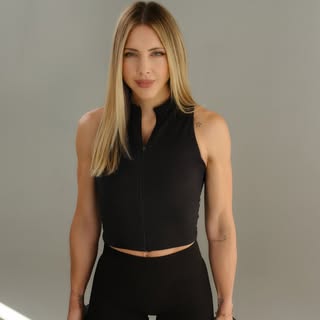
Start with the Chicago buying decision: a club experience or a lesson?
The most useful starting point for a Chicago fitness campaign is not a follower threshold. It is deciding what the viewer should understand after watching. An indoor club demo might show how a space, equipment station or hosted experience fits into a visit. An instructional session asks the creator to explain a movement, setup or sequence clearly enough that viewers can understand the intended action. These are different production assignments, even when the finished videos have similar lengths.
Write the viewing task before the creator brief
For a club demo, the task might be: “Help a prospective visitor understand the arrival process and what the featured station looks like in use.” For an instructional session, it might be: “Show the equipment adjustment and the movement from an angle where the relevant positioning remains visible.” Neither brief needs promises about health outcomes, transformation or performance improvement.
| Decision | Indoor club demo | Instructional session |
|---|---|---|
| Viewer takeaway | Understand the experience and environment | Understand a defined setup or action |
| Essential coverage | Arrival, equipment context, creator participation | Setup, visible form, explanation and recap |
| Creator evidence | Clear walkthroughs and credible product presentation | Accurate explanations and readable movement demonstrations |
| Main production risk | Background people, noise and access restrictions | Obscured positioning, unclear cues and overbroad claims |
| Approval focus | Accurate experience description | Accuracy within the agreed instructional scope |
Use a Chicago visit scenario without inventing local demand
A buyer can design content around a specific visit window, neighborhood itinerary or indoor filming requirement. These are procurement choices, not evidence that Chicago consumers behave a particular way. Likewise, a city-based creator is not automatically an expert on every local club or district.
Define one primary action
Choose one measurable next step: view a club information page, explore a featured equipment range or request details about a session. Supporting footage should help that action rather than introduce unrelated offers.
Create a one-page decision card with the format, intended viewer, destination, essential shots and prohibited claims. Add a sentence explaining why Chicago matters operationally: perhaps filming must occur at an approved Chicago location, or the offer is available there. If Chicago is only an aesthetic preference, say so. That distinction prevents paying for local access when a remote production would meet the brief, and prevents hiring an attractive national portfolio for work that genuinely requires an on-site visit.
Read the Chicago results as a sourcing order, not a verified ranking
Use Find Chicago fitness campaign creators as the starting point for a relevant search, while understanding what the listing establishes. The sourcing order begins with creators tagged Fitness & Health whose stored city matches Chicago, followed by US candidates. It is not a verified fitness-only ranking, and the broader US candidates are not necessarily based in Chicago.
Stored city is based on explicit location statements with a matching country. That is useful discovery information, but it is not independent verification of current residence. Turn it into a practical screening question: “Can you attend the proposed Chicago production location during the requested window, and what travel assumptions should the quote include?” This question matters more to a shoot than a location label alone.
Separate three kinds of fit
Location fit concerns attendance and access. Content fit concerns the creator’s ability to deliver the required fitness material. Audience fit concerns whether the people receiving the post are relevant to the offer. None of these establishes the other two. A Chicago resident may reach a national audience, while a creator elsewhere may have relevant Chicago viewers or produce effective brand-owned assets.
| Selection criterion | Evidence to request | What it does not prove |
|---|---|---|
| Chicago stored-city match | Confirmation of attendance and production assumptions | Current residence independently verified |
| Fitness & Health tag | Recent, relevant portfolio examples | Specialized instructional competence |
| Local audience suitability | Available audience-location insights and campaign context | That all followers can visit the location |
| Platform suitability | Examples in the proposed placement and format | That identical edits work everywhere |
| Production reliability | Scope agreement, review process and delivery plan | Guaranteed campaign results |
Review fitness portfolios before treating any candidate as suitable. Look for complete demonstrations, understandable narration and examples that resemble the assignment, rather than assuming a category tag means every post is about exercise. The broader Fitness & Health creators category can support a wider search when specialized content ability matters more than proximity.
Micro fitness influencers belong in this evaluation without automatic preference or dismissal. A smaller account may offer a useful teaching style or highly relevant subject focus, but account size alone does not establish audience quality, local reach or commercial effectiveness. Ask each candidate the same evidence questions. Keep unknowns visible in the shortlist rather than converting missing information into optimistic assumptions.
Build a district-to-door brief that keeps local context in its proper place
Chicago is too broad to function as a complete production instruction. A practical buyer brief narrows the job from city to district context, then to an approved filming location, then to the exact equipment or activity being shown. This produces useful local fitness campaigns without pretending that one district represents the whole city.
The district business organization’s shopping, dining and health/wellness experience context can provide background for a district-oriented concept. That context is not evidence about all Chicago, individual creators, available filming venues or permission to record. A buyer might use it to consider how a wellness stop fits within a broader visit narrative, but should independently establish every location and offer shown in the campaign.
Make a location card for each proposed setting
Keep creative inspiration separate from confirmed production facts. A location card should identify the person responsible for approving access, the spaces included and excluded, the intended filming window and any operational constraints supplied by the location. Do not assume that public-facing business information grants commercial filming rights.
- Record the exact entrance, room or equipment zone required for the storyboard.
- Identify who can approve filming and who will be present to resolve access questions.
- Ask whether mirrors, windows or walkways will reveal people outside the planned frame.
- Note whether recorded sound is essential or whether narration can be captured separately.
- List signage, displays and third-party branding that need a framing decision.
- Specify the fallback if the agreed station or room cannot be used.
A buyer-designed route can help a short local campaign feel coherent: arrival, orientation, featured activity and a clear next step. It should not imply that a creator routinely visits the business unless that is true and approved for use. Nor should an edited route suggest that separate locations are part of one facility.
For indoor work, the most consequential local detail may be operational rather than scenic. Confirm how equipment reaches the filming area, where the crew can place bags and lights, and how normal business activity will remain unobstructed. Treat these as questions for the actual location, not assumptions about Chicago clubs.
Finally, give every local reference a job. A district name can establish where an offer applies; an exterior can help someone recognize an entrance. If a reference adds no useful information, remove it rather than forcing city imagery into an otherwise instructional piece.
Design the movement frame before requesting polished edits
For fitness content, an attractive frame can still be an unusable frame. A low camera position might hide an equipment adjustment. A tight crop might remove the feet needed to understand positioning. A mirror might reveal an unconsenting participant. Resolve these issues in a shot test before the creator records the final sequence.
Form visibility is a deliverable, not a vague preference
Define which parts of the movement or setup must remain visible. For a general club demo, viewers may only need enough context to understand the station and the creator’s participation. For an instructional session, the relevant joints, contact points or equipment controls may need to stay unobstructed throughout the explanation. Avoid demanding unnecessary anatomical detail when the brief is simply an experience overview.
- Select the action and identify what the viewer must see to understand it.
- Place the camera where equipment, clothing and overlays will not hide that information.
- Record a short test showing the starting position, action and ending position.
- Review the test at phone size with proposed captions and disclosure placement.
- Approve the framing before recording alternate takes or promotional hooks.
Ask for clean footage of equipment setup when it is integral to the story. This might include adjusting the station, selecting the intended attachment or identifying the controls used during the demonstration. The equipment owner or an appropriately knowledgeable reviewer should resolve uncertainty; the creator should not improvise instructions to keep production moving.
Qualifications should follow the exact assignment
Do not require trainer credentials merely because someone appears in fitness clothing or tours a club. Do request relevant qualifications, experience and review arrangements when the deliverable includes instruction that depends on them. Check what any qualification actually covers rather than treating a title as universal expertise. Do not assert a licensing requirement without evidence applicable to the work.
For Instagram fitness creators, assess whether essential visual information survives the intended crop and interface. For TikTok fitness creators, assess whether the opening pace leaves enough time to understand the setup. These are placement-specific production checks, not assumptions that one platform favors accuracy and the other does not.
Include an explicit stop rule: if the equipment behaves unexpectedly, the requested demonstration is outside the agreed scope or the frame cannot show the necessary detail, pause and escalate. A rescheduled shot is preferable to publishing an ambiguous demonstration merely because it looks energetic.
Build a repetition-proof storyboard with a proof job for every scene
Repetition-proof does not mean promising that no two shots will ever look alike. It means designing the campaign so that each scene and deliverable contributes distinct information. Without that discipline, buyers can receive several videos that differ only in music, opening text or the order of identical exercise clips.
Assign scenes by information value
Use a storyboard matrix that names the scene’s question, visual proof and editorial role. For a club demo, an arrival shot answers where the visit begins; a station overview explains what is being used; an interaction shows how the experience unfolds. For an instructional session, setup, movement and recap each answer a different question. A close-up should reveal something the wide shot cannot.
| Deliverable | Unique job | Essential evidence | Avoid repeating |
|---|---|---|---|
| Club walkthrough | Explain the visit sequence | Entrance, orientation and featured area | Multiple generic walking montages |
| Equipment demo | Show the station in context | Setup and clearly visible use | The same action from decorative angles only |
| Instructional segment | Explain one defined action | Relevant positioning, cues and recap | A second introduction instead of instruction |
| Short reminder cut | Reinforce one decision point | One clear takeaway and destination | Compressing every scene into an unreadable montage |
| Still or cover asset | Identify the content accurately | Recognizable subject and legible title space | A pose unrelated to the actual lesson |
- Write the viewer question for each deliverable before writing its hook.
- Assign one primary proof shot to each question.
- Mark any shared footage and explain why reuse is necessary.
- Give each opening a different function, such as orientation, setup or clarification.
- Review the complete package for duplicated claims and near-identical sequences.
- Remove assets that add no information before agreeing to the final scope.
Build variation through meaning, not unnecessary physical repetition. Repeated demonstrations can increase production burden without creating new value. Alternative narration, a closer setup view or a concise recap may produce a better second asset than another full take of the same sequence.
Specify acceptance criteria in the storyboard: captions must not cover the relevant movement; an equipment close-up must be readable; the ending must point to the approved destination. Also distinguish genuinely separate creative concepts from cutdowns of one master video. Both can be useful, but they should be named accurately in the quote.
Before approval, watch the planned assets in sequence. If a buyer cannot explain the unique purpose of each one in a sentence, consolidate the package or redesign the redundant scene.
Use a consent ledger that follows people, footage and publishing decisions
An indoor fitness environment can contain people who are not part of the campaign: members, staff, guests and people reflected in mirrors. A venue agreement alone should not be treated as permission to use every identifiable person’s image. Build a consent ledger that connects the production plan to the actual footage and its intended uses, with legal review where appropriate.
Separate access from appearance consent
Location access establishes where the production may work under the agreed conditions. Appearance consent addresses identifiable participants. Content usage rights establish what the buyer can do with the finished assets. These decisions overlap operationally, but one document should not be assumed to resolve all three without checking its scope.
- Assign a reference ID to each planned participant and relevant permission record.
- Record the approved uses, channels, duration and any restrictions in plain language.
- Link each final asset to the people appearing in it, including visible reflections.
- Track unresolved background appearances for removal, blurring or additional review.
- Name the person authorized to confirm that an asset is cleared for publication.
- Store records with access controls and retain only the personal information needed.
A useful ledger status system is “planned,” “confirmed,” “restricted” and “unresolved.” Avoid marking consent as complete simply because someone attended the shoot or verbally agreed to be nearby. Use a documented process suitable for the campaign and escalate sensitive situations, including any proposed participation by minors, before filming.
Run a consent checkpoint during production
At the start, verify who is expected on camera. Before changing rooms or camera angles, check whether the new frame captures additional people. At the end, review representative footage for mirrors, screens and background traffic. This is more efficient than discovering a repeated appearance across every final edit.
The ledger should also track changes in use. If a creator originally agrees to an organic post and the buyer later wants paid advertising, recheck the scope rather than assuming the original consent covers expansion. Establish how withdrawal requests, disputes or discovered errors will be handled, while avoiding promises that every published copy can always be retrieved.
Make clearance part of version control. An approved edit can become problematic if a later crop reveals a reflection or a new opening introduces another participant. Archive the approved version with its ledger references, and require a fresh check for materially changed edits. The goal is a working production record, not paperwork that nobody consults before publication.
Choose the CFB buying path and turn sponsorship cost into a defined scope
CreatorFanBase is a managed marketplace with two relevant buying paths. Database subscriptions support discovery. Managed campaign quotes support execution: CFB contacts creators, checks availability and negotiates. Choose based on whether your team needs research access or help assembling a campaign around a specific brief, rather than assuming the two paths include identical services.
Match the purchase to your internal capacity
If your team can evaluate portfolios, manage outreach and coordinate production, Choose a creator discovery plan is the relevant next step. If you are assessing research workflows before subscribing, Compare discovery tools can help frame that decision. Do not assume that discovery access establishes creator availability or includes an agreed campaign fee.
For buyers who need creator contact, availability checks and negotiation around this assignment, Get a Chicago fitness campaign quote. Submit a brief that distinguishes indoor club demos from instructional sessions and identifies any required Chicago attendance. The quality of those inputs affects how precisely the work can be scoped; a quote is not a campaign-results guarantee.
Budget in USD without inventing market rates
There is no useful universal sponsorship cost for “a Chicago fitness influencer” detached from deliverables and rights. Request actual fees per brief in USD. Separate creation, posting, travel assumptions, editing, review rounds and licensing so that the total can be evaluated against the work being purchased.
- Define the number of distinct concepts, final assets and platform versions.
- State whether the creator publishes, supplies assets for brand channels or does both.
- Specify filming attendance, equipment dependencies and who arranges location access.
- Identify organic usage, paid usage, term, territory and any exclusivity request.
- State review responsibilities, included revisions and conditions for additional work.
- Request an itemized USD quote with assumptions and exclusions clearly recorded.
A smaller creator is not automatically the least expensive suitable option, and a larger creator is not automatically better value. A specialist instructional brief may require more preparation than a straightforward experience demo, regardless of follower count. Likewise, extending usage can change the commercial scope without changing the filming day.
Compare quotes on equivalent packages. If one includes paid usage and another includes only a creator post, their totals are not directly comparable. Record optional items separately so the buyer can reduce scope intentionally rather than negotiate away essential form visibility, consent work or disclosure. This is the practical answer to how to hire: make the work comparable before choosing the person.
Negotiate rights and disclosure around the actual publishing plan
Content usage rights should describe actions the buyer intends to take, not rely on broad phrases such as “full usage.” A creator post, a repost on the brand account, a website placement and an advertisement are different uses. Identify the required channels and duration before production so the creator can price and approve the intended scope.
| Rights item | Specify in the agreement | Buyer check |
|---|---|---|
| Creator publication | Account, format and agreed publishing window | Is posting included or is this asset delivery only? |
| Brand organic use | Named channels and permitted term | Can the brand repost and host the asset? |
| Paid media | Placements, duration, territory and permitted identity use | Is advertising expressly included? |
| Editing | Cropping, captions, cutdowns and approval boundaries | Could edits change the meaning of instruction? |
| Raw footage | Files supplied and permitted uses | Are background appearances cleared for those uses? |
| Exclusivity | Defined category, duration and scope | Is the restriction necessary for the campaign? |
Keep disclosure visible through every version
US paid and noncash material connections must be disclosed under FTC guidance. Free access, gifted products or other noncash benefits should not disappear from the disclosure decision simply because no cash fee is involved. The FTC influencer disclosure guide is relevant further reading when planning the disclosure workflow.
Build disclosure into the script, frame and caption review rather than attaching it after creative approval. Check that it is noticeable and understandable in the actual placement. A disclosure that becomes hidden by a crop, interface element or rapid opening is a production issue that needs correction. Brand reposts and paid adaptations also deserve their own review.
If the campaign targets the UK, the ASA influencer guide can be a practical disclosure reference, but its legal underpinning is subject to updates. Check the applicable requirements for the specific distribution rather than treating an older guide as a complete or permanently current statement of law.
For instructional content, editing rights need particular care. Removing a setup cue or rearranging steps can change what the demonstration communicates. Allow routine formatting changes within agreed boundaries, but require review when an edit materially changes meaning.
Finally, distinguish the creator’s endorsement from brand-authored statements. Do not add claims the creator did not make or ask the creator to imply an experience they did not have. Keep environmental and medical promises out of this brief, and make the approval owner responsible for checking both spoken copy and on-screen text.
Run a small asset test that distinguishes local audience value from production value
A campaign can succeed as an asset-production assignment without demonstrating local audience reach. It can also generate attention from Chicago viewers while producing footage that is unsuitable for continued brand use. Evaluate those outcomes separately so the buyer learns what was actually purchased and what should change next time.
Choose the measurement question before publication
For a location-specific offer, the question may concern qualified visits to a location information page or attributable inquiries. For an instructional asset, it may concern whether viewers stay through the setup and whether the content works in its intended placement. Choose measurements available through the agreed channels and tracking arrangements; do not promise access to data a creator or platform cannot supply.
Local versus national audiences should be an explicit selection decision. Ask for available audience-location insights when local distribution matters, and note their limitations, date range and granularity. City residence never proves local audience. Conversely, a national audience may be appropriate for equipment sold broadly, even if the campaign is filmed in Chicago.
- Record the baseline and campaign window used for comparison.
- Separate creator-post reporting from brand-channel and paid-media reporting.
- Track asset acceptance issues, including obscured form and missing setup footage.
- Record which audience-location evidence was available and which remained unknown.
- Distinguish observed outcomes from assumptions about why they occurred.
- Note whether any promotion, landing-page change or distribution difference affected comparison.
Use a small test to answer one or two important uncertainties, not every possible creative question. For example, compare an experience-led opening with a setup-led opening while keeping the offer and destination consistent. If the videos also differ in creator, length, publishing conditions and paid support, acknowledge that the result cannot isolate the opening alone.
A structured debrief should include qualitative findings. Did viewers ask questions already answered in the video? Did the framing make an adjustment difficult to see? Did the destination match the promise in the post? These observations can guide improvements without turning comments into unsupported claims about the whole market.
Assess micro fitness influencers by the same logic. Their value may lie in a specific presentation style, subject relevance or asset suitability, but those possibilities need evidence. Renew a creator because the documented work fits the business objective, not because a follower-size label sounds efficient or a local tag feels reassuring.
Finish with a Chicago commissioning packet that another buyer could execute
The final buying tool is a commissioning packet that converts the creative idea into an executable assignment. It should be detailed enough that a producer, reviewer or replacement project owner can understand the decisions without reconstructing a message thread. Keep the packet compact through references to the storyboard, location cards and consent ledger rather than duplicating every document.
Put the business decision on the first page
State the offer, intended viewer, primary action and reason Chicago attendance matters. Identify whether the content is a club experience demo, an instructional session or a deliberately separated package containing both. Name the evidence required from the creator, including portfolio relevance and any qualifications necessary for the exact instructional scope.
The next pages should connect the promised assets to production dependencies. Each deliverable needs a storyboard reference, framing requirement, review owner and rights entry. Each on-site scene needs a confirmed location arrangement and a plan for background people. Each publishing placement needs a disclosure check and an approved destination.
- Confirm the creator’s attendance assumptions and the location contact’s authority.
- Approve the shot test for essential movement and equipment visibility.
- Lock distinct concepts, cutdowns and platform versions as separate scope items.
- Review the consent ledger against the actual planned frames and uses.
- Confirm the USD quote, payment terms, cancellation terms and change process.
- Approve claims, disclosure, rights and publication responsibilities before delivery.
- Archive final assets, approvals and reporting requirements together.
Give changes a predictable route
A new location, additional participant, expanded instructional sequence or extended advertising term can alter the assignment. State who may authorize changes and when revised pricing or consent review is needed. Do not allow an informal request for “one more quick video” to bypass the agreed scope.
Define what makes an asset ready
An asset is ready when it meets the storyboard’s information goal, shows the necessary form or setup, contains approved language, passes the consent check and fits the agreed usage and disclosure plan. Visual polish alone is insufficient. Conversely, do not reject a clear, compliant deliverable merely because an unstated aesthetic preference emerges late.
End the packet with a short renewal note: what evidence would justify another commission, what production issue must be fixed and what should not be repeated. This closes the loop between procurement and creative learning. The strongest Chicago fitness influencer purchase is not the one with the most location references or clips; it is the one whose creator, filming design, audience evidence and permissions all serve a clearly defined business task.
Questions about Chicago fitness campaigns
How do I find Chicago fitness influencers on CreatorFanBase?
Start with the Chicago listing, which presents Fitness & Health-tagged creators with a Chicago stored-city match first, followed by US candidates. Review relevant fitness portfolios before shortlisting. Confirm attendance separately if filming must occur in Chicago, and request audience evidence if the campaign depends on reaching people who can visit a local business.
Are the Chicago results a verified fitness-only ranking?
No. The results use the Fitness & Health tag and stored location information to support discovery; they are not a verified fitness-only ranking. Evaluate recent work for the exact assignment. A club walkthrough, equipment demonstration and instructional session require different evidence, even when all three fit within a broad health and fitness category.
Does a Chicago stored city verify current residence?
No. Stored city is based on explicit location statements with a matching country, rather than independent current-residence verification. For procurement, ask whether the creator can attend the proposed location and what travel assumptions apply. Keep that operational confirmation separate from any claim about where the creator currently lives or where their audience is located.
Are the US candidates also based in Chicago?
Not necessarily. US candidates follow the Chicago stored-city matches and should be considered a broader sourcing pool. They may suit remote production, national distribution or a specialized instructional brief. If the work requires Chicago attendance, confirm feasibility and associated production assumptions before comparing their proposal with a candidate who can attend locally.
How should I assess local versus national audiences?
Begin with the offer’s availability. A single-location club needs different audience evidence from equipment sold nationally. Request available audience-location insights and record their limitations. Do not infer local reach from residence. A national audience may suit a Chicago-filmed campaign, while a Chicago-based creator may not provide enough local distribution for your objective.
Are micro fitness influencers a good choice for local campaigns?
They can be, but follower size alone does not establish local relevance, production quality or value. Assess their fitness portfolio, available audience evidence and ability to execute the brief. Compare actual deliverables and rights in the quote. A focused teaching style or useful creative approach may matter more than the account’s size category.
What should I check when hiring Instagram fitness creators?
Review examples resembling the placement you intend to buy, then check movement visibility, caption readability and the creator’s explanation style. Confirm whether posting, asset delivery or both are included. Test the proposed crop with disclosures and overlays so important equipment controls or body positioning do not disappear in the final presentation.
What should I check when hiring TikTok fitness creators?
Look for an opening that earns attention without making the setup incomprehensible. Review how the creator explains actions, handles captions and preserves essential visual information during edits. Specify the actual deliverable rather than requesting a generic platform style. Confirm publishing responsibilities, disclosure placement and whether additional brand-channel versions require separate editing or rights.
How do indoor club demos differ from instructional sessions?
A club demo explains an experience, environment or station in context. An instructional session explains a defined setup or action and therefore needs closer attention to accuracy and visible positioning. Separate their storyboards and approval criteria. Do not assume that someone who produces engaging walkthroughs can also deliver technically appropriate instruction.
When should I request trainer qualifications?
Request qualifications when the exact instructional assignment depends on relevant expertise, not merely because a creator appears in a fitness setting. Check the scope and relevance of the evidence provided. For a noninstructional club tour, clear presentation and accurate experience description may be more pertinent than credentials unrelated to the deliverable.
What does form visibility mean in a creator brief?
It means identifying the positioning, contact points or movement stages the viewer needs to see and keeping them unobstructed. Specify these requirements in the storyboard and approve a short framing test. Review at phone size with captions and disclosures present, because a technically complete wide shot can become unclear after cropping.
How should equipment setup be covered?
Show setup when it is necessary to understand the featured station or instruction. Identify the relevant controls, adjustments or attachments in advance, and resolve uncertainty with an appropriately knowledgeable reviewer. Avoid improvising instructions during filming. Agree on a fallback if the intended equipment is unavailable or cannot be shown clearly.
What is a repetition-proof storyboard?
It is a storyboard that assigns each scene and asset a distinct information job. One shot establishes the location, another explains setup and another shows the action. Review the package for duplicated sequences and claims. Label cutdowns honestly rather than counting minor changes in music or opening text as entirely separate concepts.
What belongs in a consent ledger?
Include participant reference IDs, documented permission status, approved uses, restrictions and links to the assets where each person appears. Track unresolved background appearances and identify the clearance owner. Keep location access separate from appearance consent, and recheck the ledger when paid usage, new edits or additional publishing channels are proposed.
Does venue approval cover everyone visible in the footage?
Do not assume it does. Permission to film at a location and permission to use an identifiable person’s appearance are separate questions. Plan frames to limit incidental appearances, including reflections. Resolve unclear cases through an appropriate consent or editing process, with legal review where needed, before clearing the final asset for publication.
How much does a Chicago fitness influencer sponsorship cost?
Request actual fees in USD for a defined brief rather than relying on an unsupported market estimate. Cost depends on the agreed creation work, publication, attendance, editing, rights and restrictions. Compare equivalent packages and ask for assumptions and exclusions, especially when one proposal includes advertising usage and another includes only organic posting.
How do I hire through CFB?
Choose discovery access if your team needs database research, or request a managed campaign quote if you need CFB to contact creators, check availability and negotiate. Supply the format, deliverables, attendance requirements and usage scope. Neither a listing nor discovery access should be treated as confirmation that a creator is available.
Which content usage rights should I negotiate?
Specify creator posting, brand organic use, paid media, duration, territory, editing permissions and any exclusivity. Address raw footage separately if required. For instructional content, define when changes need review because removing cues or rearranging steps can alter meaning. Avoid relying on an undefined request for full usage to cover every future application.
Do gifted access or products require disclosure?
US noncash material connections, as well as paid ones, must be disclosed under FTC guidance. Include gifted access or products in the disclosure review rather than treating them as automatically exempt. Build understandable disclosure into the content and check each final placement, including versions adapted for brand channels or paid distribution.
Can district information prove creator or venue suitability?
No. The supplied district context concerns shopping, dining and health/wellness experiences. It does not establish creator residence, audience geography, venue availability or filming permission, and it does not represent all Chicago. Use it for concept development, then independently confirm the people, location arrangements and claims required by the actual campaign.
How should a buyer measure a local fitness campaign?
Choose a business question first, such as attributable inquiries or qualified visits to a location information page. Separate distribution results from asset-production quality, and agree on available reporting before publication. Record audience-location uncertainty and tracking limitations. Avoid attributing a result to one creative change when several production or distribution variables changed.
What should be ready before the filming day?
Have an approved storyboard, location arrangements, framing test, consent process and equipment fallback. Confirm the creator’s attendance assumptions, review responsibilities, USD scope and change procedure. Prepare disclosure language and identify the final clearance owner. These decisions reduce preventable reshoots without assuming that preparation guarantees campaign performance or removes every production risk.
More city campaign guides
- Fitness influencers in Bangalore
- Los Angeles fitness influencers
- Miami food influencers
- Food bloggers in Mumbai
- Food bloggers in Delhi
- London fitness influencers
- London food influencers
- Los Angeles food influencers
- Food bloggers in Bangalore
- Dubai fashion influencers
- Fashion influencers in Mumbai
- New York fashion influencers
- London fashion influencers
- Los Angeles fashion influencers
- Fashion influencers in Delhi
- Food influencers in Dubai
- Fitness influencers Dubai
- NYC food influencers
- Fitness influencers NYC
- Miami fitness influencers
- Food bloggers in Chennai
- Food bloggers in Hyderabad
- Food bloggers in Pune
- Fitness influencers in Mumbai
- Fitness influencers in Delhi
- Chicago food influencers
- Chicago fashion influencers
- San Diego food influencers
- San Diego fitness influencers
- San Diego fashion influencers
- Dallas food influencers
- Dallas fitness influencers
- Dallas fashion influencers
- Manchester food influencers
- Manchester fitness influencers
- Manchester fashion influencers
- Nashville food influencers
- Nashville fitness influencers
- Nashville fashion influencers
- Austin food influencers
- Austin fitness influencers
- Atlanta food influencers
- Atlanta fitness influencers
- Atlanta fashion influencers
- Houston food influencers
- Houston fitness influencers
- Houston fashion influencers
- Las Vegas food influencers
- Miami fashion influencers
- Toronto food influencers
- Toronto fashion influencers
- Toronto fitness influencers
- Sydney food influencers
- Sydney fashion influencers
- Sydney fitness influencers
- Melbourne food influencers
- Melbourne fashion influencers
- Melbourne fitness influencers
- Singapore food influencers
- Singapore fashion influencers
- Singapore fitness influencers
- Boston food influencers
- Boston fitness influencers
- Boston fashion influencers
- Seattle food influencers
- Seattle fashion influencers
- Seattle fitness influencers
- Austin fashion influencers
- Las Vegas fitness influencers
- Las Vegas fashion influencers
- Chennai fitness influencers
- Chennai fashion influencers
- Pune fitness influencers
- Hyderabad fitness influencers
- New York lifestyle influencers
- Miami lifestyle influencers
- London lifestyle influencers
- Dubai lifestyle influencers
- Los Angeles lifestyle influencers
- Toronto lifestyle influencers
- Sydney lifestyle influencers
- Chicago lifestyle influencers
- Dallas lifestyle influencers
- Melbourne lifestyle influencers
- Singapore lifestyle influencers
- Atlanta lifestyle influencers
- Manchester lifestyle influencers
- Boston lifestyle influencers
- Houston lifestyle influencers
- San Diego lifestyle influencers
- Las Vegas lifestyle influencers
- London travel influencers
- New York travel influencers
- Los Angeles travel influencers
- Toronto travel influencers
- Singapore travel influencers
- Chicago travel influencers
- Vancouver food influencers
- Vancouver fashion influencers
- Vancouver fitness influencers
- Philadelphia food influencers
- Philadelphia fitness influencers
- Philadelphia lifestyle influencers
- Detroit food influencers
- Baltimore food influencers
- Pittsburgh food influencers
- Edinburgh food influencers
- Glasgow food influencers
- Vancouver lifestyle influencers
- san antonio food influencers
- san francisco food influencers
- san francisco fitness influencers
- san francisco fashion influencers
- denver food influencers
- denver fitness influencers
- orlando food influencers
- charlotte food influencers
- portland food influencers
- phoenix food influencers
- tampa fitness influencers
- new york beauty influencers
- los angeles beauty influencers
- chicago beauty influencers
- dallas beauty influencers
- london beauty influencers
- birmingham food influencers
- bristol food influencers
- bangalore lifestyle influencers