



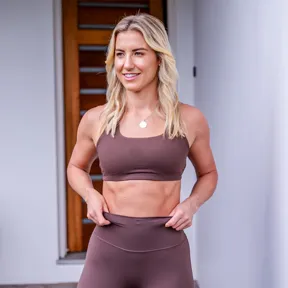
1. Start with a four-seasons production brief, not a creator wish list
A Melbourne fitness campaign should begin with a production decision: what must remain clear and credible if the outdoor shoot cannot proceed as planned? Treat four-seasons planning as a resilience exercise, not a weather forecast. Before selecting a creator, decide which demonstrations need stable footing, intelligible audio, consistent lighting and uninterrupted access. Those requirements determine whether an outdoor concept is practical and whether a backup can preserve the same commercial message.
For example, a campaign showing a bag being packed for training can move indoors relatively easily. A concept built around a complete park circuit cannot necessarily become a gym session without changing permissions, exercise selection, framing and costs. Ask creators to propose a weather-safe version of the actual deliverable, not simply promise that they can improvise.
Build three versions of the same creative idea
A useful Melbourne brief has a primary setup, an approved alternative and a postponement threshold. The alternative should retain the product, audience problem and call to action. Postponement becomes appropriate when neither setup can meet the agreed safety, access or demonstration requirements.
Separate visual preferences from production necessities
Sunlight, greenery and an outdoor atmosphere may be preferences. Stable equipment, safe surfaces and an approved filming area are necessities. Make this distinction before anyone books travel or reserves a space.
Name the person who can change the plan
Give one brand representative authority to approve the fallback. Otherwise, a creator may spend the shoot window waiting for several people to decide whether a different background still fits the campaign.
- Define the action the audience should understand, such as how a product fits into a training routine.
- Identify environmental conditions that would compromise the demonstration or recording.
- Approve an indoor or sheltered alternative, including any change in exercises or props.
- Set a go/no-go checkpoint and an agreed communication channel.
- Record who pays for approved changes, cancellations and a replacement shoot.
Keep continuity practical. Wardrobe layers, towel placement, equipment position and product packaging can change between takes. Request a few reference photographs so edits do not jump between visibly different setups. Also identify which spoken lines can be recorded separately without misrepresenting what happened during the demonstration.
The resulting weather brief is a selection tool. A creator who explains the limits of a proposed setup may be a better operational fit than one who agrees to every idea. Evaluate their contingency thinking alongside their visual style, especially when the campaign has a fixed launch window.
2. Make the gym-versus-park permission decision before choosing the shot
Indoor and outdoor fitness content create different permission questions. A gym is not automatically available for commercial filming because a creator trains there. A park is not automatically unrestricted because the public can enter it. Identify the specific space and responsible operator or land manager, then confirm what applies to the proposed activity. Do not assume that one location's answer transfers to another.
Keep the first enquiry concrete. Explain the crew size, equipment, intended exercises, filming duration, commercial purpose and whether the content will become paid advertising. Ask about background people, sound recording, equipment movement and acceptable filming areas. Avoid declaring that a particular permit or licence is required unless the relevant authority or operator has confirmed it.
| Decision criterion | Gym-based concept | Park-based concept | Buyer action |
|---|---|---|---|
| Access authority | Facility operator controls access and filming conditions | Responsible land manager needs to be identified | Obtain a location-specific answer before committing |
| Background people | Members or staff may enter the frame | Passers-by may cross the filming area | Plan framing and obtain appropriate consent where needed |
| Audio and branding | Music, signs and other brands may be prominent | Ambient noise and incidental signage may interfere | Check the recording and commercial-use implications |
| Demonstration conditions | Equipment access and layout may constrain the sequence | Surface, exposure and available space may constrain it | Approve the actual exercise setup, not just the scenery |
| Backup feasibility | Access may depend on a booking or operator approval | An alternative area may have different conditions | Confirm the fallback independently |
A practical location pack should include the permission contact, approved activity, filming boundaries, access window and any written conditions. Where the operator gives verbal approval, request written confirmation of the agreed scope. This protects both the buyer and creator from different recollections on shoot day.
- Ask whether commercial filming and later advertising use are covered by the approval.
- Establish how other people will be kept out of identifiable shots or appropriately cleared.
- Check whether visible logos, screens and background music need to be avoided.
- Confirm whether moving equipment or bringing additional props is acceptable.
- Record the stop-work contact if conditions change during the shoot.
For early visual research, the official Visit Melbourne tourism website can help buyers explore the city's presentation. It is not a substitute for location permission or a site assessment. Never convert a tourism image into an assumed filming entitlement.
If the campaign depends on a particular setting, make access a condition of final creative approval. If the setting is merely decorative, choose the option that reduces uncertainty while keeping the demonstration believable.
3. Turn demonstration accuracy into an approval system
Fitness sponsorship needs more than attractive movement. The audience should be able to understand what is being shown, which product features are being demonstrated and where the content's limits sit. A polished edit can still be unsuitable if it hides the setup, cuts between inconsistent positions or presents an exercise variation without adequate context.
Start by separating product demonstration from exercise instruction. Showing how a bottle opens, a bag compartment works or a garment moves requires different review from teaching a loaded movement. The more instructional the concept becomes, the more carefully the buyer should assess the creator's relevant experience and the need for a suitably qualified reviewer. Do not infer credentials from physique, confident delivery or a Fitness & Health tag.
Use a demonstration acceptance sheet
The sheet should describe observable requirements rather than vague requests for professional-looking content. Specify which equipment settings must be visible, whether the starting position needs a full-body shot and which product details require close-ups. Where a claim depends on a feature, supply accurate product information and define the permitted wording.
- Ask the creator to outline the movement or product sequence before filming.
- Review the setup, camera angle and proposed spoken explanation together.
- Identify statements that need evidence, clarification or removal.
- Review a rough cut for misleading edits and unclear demonstrations.
- Approve the final video, caption, on-screen text and disclosure as one package.
Avoid scripts promising weight loss, injury prevention, pain relief, strength gains or other health outcomes. A buyer can describe verifiable product characteristics without promising what will happen to a viewer's body. Even a creator's personal anecdote can create a broader advertising impression when positioned as a reason to buy. Review that impression rather than relying on a small disclaimer.
Agree on corrections in advance. A product shown incorrectly should trigger a factual correction, while a late brand preference about camera style should be treated according to the agreed revision scope. This prevents safety or accuracy concerns from becoming entangled with unlimited aesthetic changes.
For Australian campaigns, build review around applicable AANA codes and ACCC requirements, including clear advertising identification and truthful, supportable representations. The AANA self-regulation codes are a relevant starting point for further reading; obtain current, campaign-specific advice where needed.
Accuracy is also a creator-selection advantage. Ask candidates how they handle an instruction they consider unsuitable, an unfamiliar piece of equipment or a claim they cannot substantiate. The useful answer is a process for checking and escalating, not automatic agreement.
4. Read Melbourne provenance correctly before building the shortlist
The relevant CreatorFanBase listing scope starts with creators tagged Fitness & Health whose stored city matches Melbourne, followed by Australia candidates. That ordering is useful for discovery, but it does not establish a verified fitness-only ranking. A broad category match is the beginning of assessment, not a verdict that every profile suits an instructional workout, gym promotion or sports-product campaign.
Stored city is provenance: it is based on explicit location statements with a matching country. It is not independent verification of current residence. Use a Melbourne match as a reason to ask about current shoot access, travel requirements and suitability for the brief. Do not treat it as proof that the creator can attend a particular shoot or reach a predominantly local audience.
Start with Find Melbourne fitness campaign creators, then inspect the fitness relevance of each candidate. The broader Fitness & Health creators view can support comparison when the campaign needs a different content style or a wider production search. Review actual fitness portfolios rather than letting category labels substitute for evidence.
| Selection criterion | Evidence to request or review | What it cannot establish alone |
|---|---|---|
| Stored Melbourne city | Location provenance and current logistical confirmation | Current residence, availability or local audience share |
| Fitness & Health tag | Recent relevant posts and demonstrated content themes | Fitness-only specialisation or professional credentials |
| Demonstration suitability | Comparable clips with clear setup and explanation | Suitability for every exercise or product |
| Local audience fit | Recent audience-location information, with reporting limits | Guaranteed attendance, purchases or campaign response |
| Australia-wide alternative | Country context, production location and travel scope | Melbourne residence or frictionless local participation |
| Commercial readiness | Disclosure examples, approval process and rights discussion | Guaranteed compliance on a future campaign |
Keep Australia-wide candidates in a distinct comparison group. They are not necessarily Melbourne-based. They may still be useful when the product ships nationally, the content can be produced remotely or the campaign needs a particular demonstration style. Their value should be evaluated against the brief, not presented as an extension of the city's resident creator pool.
For micro fitness influencers, prioritise subject relevance and workable production habits over an assumed audience-size advantage. No follower band inherently proves stronger engagement, lower cost or better local reach. Ask for current evidence and compare the work required.
A shortlist should therefore carry three separate labels: location provenance, confirmed production feasibility and demonstrated audience relevance. Keeping these fields separate makes it harder for a convenient city label to become an unsupported business assumption.
5. Define what local means through the customer's next action
Local fitness campaigns are most effective to plan when local describes a commercial requirement, not simply a backdrop. A Melbourne gym enquiry campaign, a nationally shipped accessory launch and a digital subscription offer have different geographic needs. They may all feature Melbourne fitness influencers, but they should not share the same audience-selection rule.
Begin with the action the buyer wants to make easier. If a person needs to visit a facility, the relevant audience is people who can realistically use that facility. If the offer is available throughout Australia, a creator's national audience may be commercially useful even when the creative is produced in Melbourne. Neither strategy is inherently superior; the mistake is paying for one while measuring the other.
Write a geography-to-action brief
Describe the service area in terms the business actually uses. Avoid inventing a neighbourhood affinity from a creator's appearance, language or occasional location tag. Ask for audience-location reporting where available and note what the platform can and cannot resolve. A city-level breakdown may not answer a question about practical travel distance.
- For visit-led offers, prioritise accessible audience geography and a clear enquiry path.
- For shipped products, evaluate fulfilment coverage and relevant interest alongside location.
- For digital offers, check eligibility, time-zone implications and the promised experience.
- For awareness work, define whether Melbourne context is part of the creative or a required audience concentration.
- For mixed campaigns, report local-response objectives separately from national exposure.
Distinguish residence from audience. A creator stored as Melbourne may attract viewers across Australia or beyond it. Conversely, an Australia-wide candidate may have some Melbourne audience relevance, but that must be evidenced rather than assumed. Current production location and audience location are different data questions.
Use a simple commercial test before approaching candidates: would this campaign still make sense if most viewers were outside Melbourne? If the answer is no, local audience evidence should receive substantial weight. If the answer is yes, avoid excluding suitable national candidates solely because they are not based in the city.
The call to action must reflect the same decision. A visit-led post should not send viewers to a generic destination that obscures the relevant service. A national product campaign should not suggest local exclusivity when none exists. Confirm landing-page wording, eligibility and any offer conditions before the creator records their lines.
This exercise also guides tone. Melbourne context can come from credible production and an appropriate routine; it does not require invented local expertise, named landmarks or repeated city references. Specificity should be earned by the brief and verified details.
6. Choose platform deliverables around what needs to be seen
Instagram fitness creators and TikTok fitness creators should be assessed through the proposed demonstration, not assumptions about which platform automatically converts better. Some products need a continuous movement sequence. Others benefit from close-ups, a spoken explanation or a saved reference format. Select the evidence the viewer needs first, then decide which deliverables can carry it clearly.
Ask candidates for comparable work on the relevant platform. A strong still-image portfolio does not establish that a creator can explain equipment use on video. Equally, a compelling short-form editor may not be the best choice for a sequence where uninterrupted footage matters. Look for the relationship between framing, pacing and comprehension.
| Deliverable | Useful campaign role | Demonstration risk to review | Brief detail to specify |
|---|---|---|---|
| Instagram Reel | Concise routine integration or feature explanation | Fast cuts can hide setup or distort continuity | Required angles, spoken points and final caption |
| Instagram carousel | Step-by-step product details or preparation checklist | Isolated images can omit movement context | Slide sequence and limits of instructional wording |
| Instagram Stories | Timely explanation and a direct next step | Short-lived context can make terms easy to miss | Frame order, disclosure and destination details |
| TikTok video | Creator-led explanation with a clear opening premise | Entertainment devices can overstate the product's role | Hook boundaries and visible feature demonstration |
| Brand-channel asset | Reusable product demonstration | Creator-post permissions may not cover brand publishing | File specification and separately agreed usage rights |
Do not assume one video can be posted everywhere unchanged. Cropping may remove an equipment setting, captions may cover foot placement, and platform overlays may obscure the product. Request platform-specific safe framing where cross-platform use is genuinely needed. Treat additional edits as defined deliverables rather than casual extras.
A useful content brief contains a must-show list and a must-not-imply list. Must-show items might include a fastening method or storage feature. Must-not-imply items should cover unsupported product performance, medical suitability and health outcomes. This leaves space for the creator's voice while preserving factual control.
For micro fitness influencers, a narrower package can be easier to evaluate than a broad bundle of posts with different purposes. That is a scope decision, not a claim that smaller creators are necessarily cheaper. Ask what each deliverable contributes and remove formats that merely duplicate the same message.
Finally, establish whether the creator will publish the asset, supply it for brand use, or do both. Those are different commercial arrangements. Platform choice, publication obligations and licensing should be visible separately in the brief so a polished video is not mistaken for a complete distribution plan.
7. Map content usage rights to the life of the campaign
Content usage rights should be agreed before production because they can change the concept, clearance needs and fee. A creator's organic post is not an automatic licence for the buyer to use the video in advertisements, on a website or in a retail display. Nor does payment for production necessarily transfer ownership of every file created during the shoot.
Map the campaign's intended asset journey. Will the brand repost the finished clip, publish it on its own channels, edit it into an advertisement or use creator-account advertising permissions? Each use needs an explicit agreement. State the duration, territory, channels, permitted edits and whether the creator's name, image and voice are included for those uses.
| Rights item | Decision to record | Why it matters operationally |
|---|---|---|
| Creator publication | Platform, deliverable and agreed live period | Establishes the posting obligation separately from licensing |
| Organic brand use | Named channels, term and permitted reposting | Avoids treating a creator post as unrestricted brand content |
| Paid media use | Platforms, term, territory and agreed advertising setup | Allows media planning without assumed permissions |
| Editing rights | Crops, captions, cutdowns and changes requiring approval | Protects demonstration accuracy after delivery |
| Raw footage | Files supplied and authorised uses | Raw material can create new privacy, clearance and context issues |
| Exclusivity | Defined competitor category and time period | Makes restrictions assessable rather than open-ended |
| Renewal | Notice process and method for agreeing additional fees | Prevents accidental use beyond the licensed term |
Preserve accuracy when making cutdowns
An edit that works as entertainment may fail as an instructional advertisement. Removing the setup or qualification can alter the meaning of a demonstration. Require review when a new version changes the exercise sequence, spoken claim or product context, rather than assuming every shorter edit is equivalent.
Rights also interact with location planning. Check whether the relevant location approval and any participant releases fit the intended commercial use. A clip recorded with identifiable background people may be unsuitable for broader advertising even if the original post felt informal. Avoid solving this after the brand has committed media spend.
Third-party music and other embedded material need attention too. Do not assume availability in a platform's creation tools establishes permission for every downstream use. Confirm the proposed soundtrack against the actual distribution plan and choose an appropriate alternative where necessary.
Keep a rights register with the final asset name, approved version, channels, start and end dates, and renewal contact. Give the media and website teams access. Rights management is not complete when a contract is signed; it must govern what the business continues publishing.
8. Build an AUD budget from scope, not imagined sponsorship averages
The useful answer to Melbourne fitness influencer sponsorship cost is a brief-specific quote in AUD. Without confirmed deliverables, rights, location arrangements and production responsibilities, a headline price can be misleading. Do not substitute unsupported market estimates for the actual fees a creator and campaign require.
Build the budget around decisions you can control. Production, creator publication, licensing, exclusivity, travel and location arrangements should be identified separately where relevant. A campaign with a simple indoor demonstration and organic publication is not commercially equivalent to one requiring multiple outdoor setups, paid advertising rights and several platform-specific edits.
- Write the base scope: creators, deliverables, publication obligations and review rounds.
- Identify production dependencies, including approved space, props and any specialist review.
- Define rights by channel, duration, territory and permitted changes.
- Add weather-contingency responsibilities and cancellation or rescheduling terms.
- Request the resulting fees in AUD and clarify tax treatment and exclusions.
- Compare equivalent scopes before selecting the preferred option.
A quote comparison should expose missing assumptions. If one option includes brand-channel usage and another covers creator posting only, they cannot be compared by total alone. The same applies when one creator provides edited cutdowns and another supplies a single finished video. Ask for clarification rather than quietly assigning imagined value to unspecified work.
Reserve decision-making room for foreseeable changes without inventing a universal contingency percentage. The amount depends on the production risk and the business's approval process. What matters is identifying which changes can be authorised, by whom, and at what point an updated quote becomes necessary.
For a Melbourne shoot, weather-related costs deserve explicit treatment. Ask what happens if the agreed fallback is available but visually different, if access is withdrawn, or if conditions prevent a safe demonstration. Distinguish a brand-requested creative reshoot from a reshoot caused by a failure to meet the approved brief. The commercial consequences should not be negotiated for the first time on location.
Micro fitness influencers may be appropriate for tightly focused work, but smaller audience size is not a fixed discount formula. Expertise relevant to the demonstration, production effort, licensing and exclusivity can all affect the proposal. Likewise, a national candidate may introduce travel costs or avoid them through remote production; neither outcome should be assumed.
A disciplined buyer can reduce cost by narrowing genuine scope: fewer versions, a shorter agreed licence or a simpler approved setup. Do not reduce cost by leaving permissions, disclosure, accuracy review or essential rights ambiguous.
9. Choose the CreatorFanBase buying path once the brief is actionable
CreatorFanBase is a managed marketplace with two relevant buying paths: database subscriptions for discovery, and managed campaign quotes. The choice depends on whether your team primarily needs a research tool or help progressing a defined creator campaign. Make that decision after clarifying geography, demonstration needs and production constraints so the buying route serves an actual task.
A discovery subscription suits a team that wants to research candidates and maintain its own selection process. Review Choose a creator discovery plan for the available plan information rather than assuming prices or access features. If you are weighing different research approaches, Compare discovery tools provides a relevant next step. Do not equate database access with creator participation, availability or agreement to a campaign.
For managed campaign quotes, CFB contacts creators, checks availability and negotiates. A buyer ready to discuss a scoped campaign can use Get a Melbourne fitness campaign quote. The quote should reflect the actual brief; it is not a promise that particular creators will be available or that campaign results are guaranteed.
Supply a brief that can be checked, not just interpreted
The more operationally clear the brief, the easier it is to distinguish a suitable creator from a visually appealing but impractical option. Explain whether Melbourne presence is necessary, whether Australia-wide candidates are acceptable and whether travel or remote production can be considered. Keep location provenance separate from any current-location confirmation you need.
- State the business objective and the audience's intended next action.
- Describe the product, permitted factual claims and prohibited health-outcome promises.
- Specify platforms, deliverables, publication expectations and review milestones.
- Explain the gym or park concept, permission responsibilities and weather fallback.
- Define proposed usage rights, exclusivity and any paid advertising use.
- Give the desired production window, budget parameters in AUD and approval contact.
When learning how to hire, buyers often focus on the first approach and underestimate the response stage. Be ready to answer reasonable creator questions about exercise selection, access, advertising use and revisions. A quick but incomplete response can slow the process more than a deliberate, complete one.
Use consistent evaluation notes as proposals develop. Record unresolved items such as location approval, final claims wording or a requested rights change. Do not mark a candidate ready simply because the creative treatment is appealing.
The end point of this stage is a documented scope and decision, not just a shortlist. Before production begins, the parties should understand what is being made, who is publishing it, what can be reused and which dependencies still need confirmation.
10. Run launch control and measurement as one Melbourne campaign record
A fitness campaign needs a launch record that connects the approved demonstration to the published asset and the business result. Without that connection, teams can measure the wrong version, overlook an altered caption or continue using content after its licence ends. Keep one accessible record for final files, approvals, publication links, rights and reporting definitions.
Perform a final review of the whole advertisement. Check video, spoken wording, on-screen text, caption, disclosure, destination page and offer conditions together. Advertising identification should be clear rather than hidden or left to the viewer to infer. AANA and ACCC considerations belong in this complete review, not just in a sentence appended to the contract. Seek appropriate advice for uncertain claims or regulated products.
Separate production success from business performance
Production success means the asset met the approved brief: accurate demonstration, appropriate permission, usable framing and correct rights. Business performance concerns the intended response, such as relevant traffic or enquiries. A campaign can perform well on one dimension and poorly on another; combining them into a single impression makes improvement difficult.
- Save the approved final package and record any last-minute changes.
- Check the live post against that package, including disclosure and links.
- Record the agreed platform metrics with their reporting window and definitions.
- Compare tracked actions with the campaign's local or national objective.
- Log audience questions, factual concerns and required corrections.
- Review renewal or retirement decisions before licensed use expires.
For a local enquiry campaign, examine whether leads meet the business's actual service-area and eligibility needs. A city-resident creator does not make every enquiry local. For a nationally available product, assess the relevant national response rather than treating non-Melbourne interest as wasted by default. Measurement should follow the geography decision made in the brief.
Use tracking carefully. A link, code or enquiry-field response can provide useful attribution signals, but none necessarily captures every influence on a purchase. Distinguish directly tracked actions from wider interpretation and avoid presenting uncertain causation as proven campaign impact. Request platform reporting that supports the agreed objectives without inventing audience geography where it is unavailable.
Set a moderation and correction owner. Fitness audiences may ask for personalised advice, challenge a demonstration or interpret a product as suitable for a particular condition. Prepare boundaries for responses and escalate substantive safety or factual issues instead of improvising health advice in comments.
Finish with a short operational review: which weather contingency worked, which permission question delayed production, which demonstration required clarification and which rights were actually used. These findings improve the next Melbourne campaign without relying on inflated reach claims, unsupported health promises or assumptions about where a creator's audience lives.
Questions about Melbourne fitness campaigns
How do I find Melbourne fitness influencers on CreatorFanBase?
Start with the Melbourne discovery page and review candidates tagged Fitness & Health. The relevant scope places stored Melbourne city matches before Australia candidates. Then inspect recent fitness content, demonstration quality and commercial suitability. Confirm current production feasibility separately; a stored city match is not a guarantee of residence, availability or local audience reach.
Does a stored Melbourne city mean the creator's residence is verified?
No. Stored city is based on explicit location statements with a matching country, not independent current-residence verification. Use it as discovery provenance. If attendance matters, confirm the creator's current ability to film in Melbourne, any travel requirements and access to the proposed setting before treating them as a workable production option.
Are Australia-wide candidates necessarily based in Melbourne?
No. Australia-wide candidates belong in a separate comparison group and should not be described as Melbourne-based without supporting information. They may suit nationally available products, remote production or a specialised creative brief. Confirm their production location and any travel needs, and assess Melbourne audience relevance separately if local response is essential.
Is the listing a verified fitness-only ranking?
No. Fitness & Health is a discovery category, and the listing is not a verified fitness-only ranking. Review each creator's actual portfolio for relevant demonstrations, explanations and product integrations. Category inclusion does not establish professional qualifications, instructional competence, audience suitability or readiness to deliver the specific campaign you have in mind.
How should I assess micro fitness influencers?
Assess micro fitness influencers against the same practical criteria as other candidates: relevant content, clear demonstrations, audience fit and dependable production. Do not assume smaller creators are cheaper or more locally influential. Request current evidence and a scope-specific proposal, then decide whether their content and audience serve the campaign's next action.
Does living in Melbourne prove a creator has a Melbourne audience?
No. Residence and audience geography are separate questions. Ask for recent platform audience-location information where available, and note its reporting limitations. A Melbourne creator may reach viewers nationally or internationally. For a visit-led campaign, assess whether the available evidence supports the service area rather than using residence as a proxy.
Should I choose Instagram fitness creators or TikTok fitness creators?
Choose according to the demonstration and viewer action, not an assumed platform advantage. Review comparable work on the intended platform. Check whether the creator can show the setup clearly, explain the relevant product feature and integrate an appropriate call to action. Request separate adaptations when framing or platform overlays would compromise a reused edit.
What should I include when asking how to hire a creator?
Provide the business objective, product information, audience geography, platforms, deliverables and desired timing. Include proposed rights, approval stages, budget parameters in AUD and location responsibilities. For Melbourne fitness work, explain the weather fallback and demonstration requirements. This gives candidates enough context to assess suitability instead of responding to an undefined sponsorship enquiry.
What is the sponsorship cost for Melbourne fitness influencers?
There is no useful universal figure without a defined brief. Request actual fees in AUD for the proposed deliverables, publication, licensing, exclusivity and production arrangements. Clarify travel, location costs, tax treatment and exclusions. Compare equivalent scopes rather than assuming a lower total includes the same rights or work as another proposal.
How do CreatorFanBase's discovery and managed campaign options differ?
Database subscriptions support creator discovery. Managed campaign quotes involve CFB contacting creators, checking availability and negotiating around the campaign brief. Choose according to whether your team needs research access or help progressing a scoped campaign. Neither database inclusion nor a quote should be treated as a guarantee of creator participation or campaign results.
Why should a Melbourne fitness campaign have a weather fallback?
Outdoor conditions can affect audio, footing, lighting and demonstration clarity. A pre-approved fallback prevents rushed changes that alter the concept or create new permission questions. Define an alternative setup, decision checkpoint and postponement threshold. Also agree who authorises changes and how associated costs are handled before the shoot window arrives.
Can a creator film sponsored content in their usual gym?
Do not assume ordinary gym access covers commercial filming. Ask the facility operator about the specific activity, equipment, crew, background people and intended advertising use. Obtain confirmation of the agreed conditions. The creator's membership or training relationship may help start the conversation, but it should not replace a location-specific permission decision.
Do park shoots always need a permit?
Do not assume a universal answer. Identify the responsible land manager and describe the proposed commercial filming, equipment, crew and activity. Ask what permissions or conditions apply to that exact setup. Public access alone does not establish unrestricted filming rights, and an answer for one location should not be transferred to another.
How can I check demonstration accuracy without inventing credentials?
Review comparable footage and ask the creator to explain the proposed setup and sequence. Verify any qualifications you intend to rely on rather than inferring them from appearance or category tags. For instructional concepts, consider a suitably qualified reviewer. Define visible acceptance criteria so approval focuses on what the content actually demonstrates.
What health claims should the brief avoid?
Avoid promises about weight loss, pain relief, injury prevention, strength gains or other health outcomes. Focus on accurate, supportable product features and clearly described use. Review testimonials and implied messages as well as explicit wording. A disclaimer does not automatically correct an advertisement whose overall impression promises an unsupported result.
How should AANA and ACCC considerations enter the workflow?
Include them from scripting through publication, with clear advertising identification and review of factual claims and overall impressions. Check the video, caption, on-screen text and destination page together. Consult current official guidance and obtain campaign-specific advice where appropriate. Compliance should not depend solely on a creator adding a disclosure after production.
Does paying for a creator post include paid advertising rights?
Not automatically. Creator publication, organic brand use and paid media use are separate matters to negotiate. Define channels, duration, territory, editing permissions and any creator-account advertising arrangement. Record the approved scope before spending on distribution, and ensure location, music and participant clearances are suitable for the intended downstream use.
Should I request raw footage?
Request it only when there is a clear production purpose and an agreed licence. Raw footage may contain unapproved demonstrations, background people or material unsuitable for publication. Specify which files are included, permitted edits and any review requirements. Receiving source files does not automatically create unrestricted rights to make new advertisements.
How should I handle exclusivity?
Define the restricted competitor category, duration and relevant activities precisely. Avoid broad wording that could unintentionally prevent unrelated fitness work. Ask how the restriction affects the proposal and whether existing commitments conflict. Exclusivity should solve a specific commercial concern, not become an open-ended demand added after the creator has accepted the production scope.
How do I measure a local fitness campaign?
Start with the intended action and service area. Track relevant enquiries, visits to the appropriate destination and other agreed responses, while distinguishing platform metrics from business outcomes. Review whether leads fit the actual local offer. Treat links and codes as attribution signals rather than proof that they capture every influence on customer behaviour.
When is a national audience better than a local audience?
A national audience may be more useful when the product ships across Australia or the offer is available digitally without a Melbourne attendance requirement. Local concentration matters more when customers must visit a facility. Decide from the business model, then evaluate audience evidence; neither a Melbourne backdrop nor residence should determine the answer alone.
What must be confirmed before the content goes live?
Confirm the final demonstration, factual wording, advertising disclosure, caption, destination and offer conditions. Check location and participant permissions, music suitability and the agreed usage rights. Save the approved version and assign someone to inspect the live post. Also establish who handles corrections, audience questions and the eventual expiry or renewal of licensed use.
More city campaign guides
- Fitness influencers in Bangalore
- Los Angeles fitness influencers
- Miami food influencers
- Food bloggers in Mumbai
- Food bloggers in Delhi
- London fitness influencers
- London food influencers
- Los Angeles food influencers
- Food bloggers in Bangalore
- Dubai fashion influencers
- Fashion influencers in Mumbai
- New York fashion influencers
- London fashion influencers
- Los Angeles fashion influencers
- Fashion influencers in Delhi
- Food influencers in Dubai
- Fitness influencers Dubai
- NYC food influencers
- Fitness influencers NYC
- Miami fitness influencers
- Food bloggers in Chennai
- Food bloggers in Hyderabad
- Food bloggers in Pune
- Fitness influencers in Mumbai
- Fitness influencers in Delhi
- Chicago food influencers
- Chicago fitness influencers
- Chicago fashion influencers
- San Diego food influencers
- San Diego fitness influencers
- San Diego fashion influencers
- Dallas food influencers
- Dallas fitness influencers
- Dallas fashion influencers
- Manchester food influencers
- Manchester fitness influencers
- Manchester fashion influencers
- Nashville food influencers
- Nashville fitness influencers
- Nashville fashion influencers
- Austin food influencers
- Austin fitness influencers
- Atlanta food influencers
- Atlanta fitness influencers
- Atlanta fashion influencers
- Houston food influencers
- Houston fitness influencers
- Houston fashion influencers
- Las Vegas food influencers
- Miami fashion influencers
- Toronto food influencers
- Toronto fashion influencers
- Toronto fitness influencers
- Sydney food influencers
- Sydney fashion influencers
- Sydney fitness influencers
- Melbourne food influencers
- Melbourne fashion influencers
- Singapore food influencers
- Singapore fashion influencers
- Singapore fitness influencers
- Boston food influencers
- Boston fitness influencers
- Boston fashion influencers
- Seattle food influencers
- Seattle fashion influencers
- Seattle fitness influencers
- Austin fashion influencers
- Las Vegas fitness influencers
- Las Vegas fashion influencers
- Chennai fitness influencers
- Chennai fashion influencers
- Pune fitness influencers
- Hyderabad fitness influencers
- New York lifestyle influencers
- Miami lifestyle influencers
- London lifestyle influencers
- Dubai lifestyle influencers
- Los Angeles lifestyle influencers
- Toronto lifestyle influencers
- Sydney lifestyle influencers
- Chicago lifestyle influencers
- Dallas lifestyle influencers
- Melbourne lifestyle influencers
- Singapore lifestyle influencers
- Atlanta lifestyle influencers
- Manchester lifestyle influencers
- Boston lifestyle influencers
- Houston lifestyle influencers
- San Diego lifestyle influencers
- Las Vegas lifestyle influencers
- London travel influencers
- New York travel influencers
- Los Angeles travel influencers
- Toronto travel influencers
- Singapore travel influencers
- Chicago travel influencers
- Vancouver food influencers
- Vancouver fashion influencers
- Vancouver fitness influencers
- Philadelphia food influencers
- Philadelphia fitness influencers
- Philadelphia lifestyle influencers
- Detroit food influencers
- Baltimore food influencers
- Pittsburgh food influencers
- Edinburgh food influencers
- Glasgow food influencers
- Vancouver lifestyle influencers
- san antonio food influencers
- san francisco food influencers
- san francisco fitness influencers
- san francisco fashion influencers
- denver food influencers
- denver fitness influencers
- orlando food influencers
- charlotte food influencers
- portland food influencers
- phoenix food influencers
- tampa fitness influencers
- new york beauty influencers
- los angeles beauty influencers
- chicago beauty influencers
- dallas beauty influencers
- london beauty influencers
- birmingham food influencers
- bristol food influencers
- bangalore lifestyle influencers